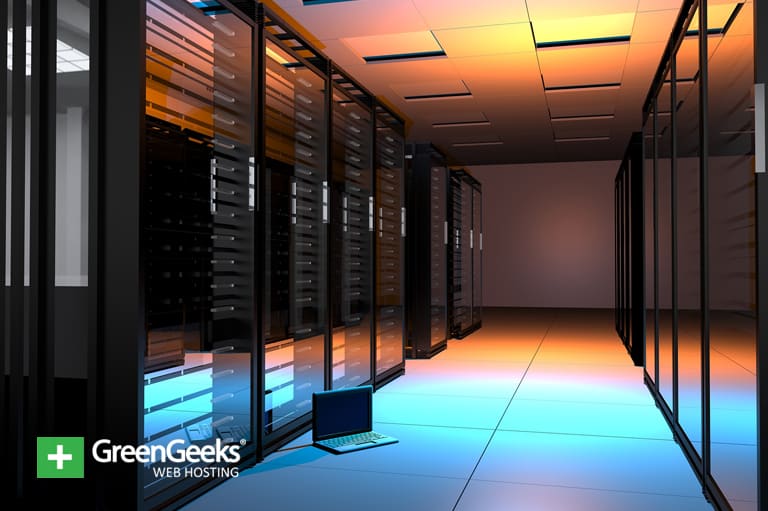
Rows of racks fill a purpose-built industrial building in a specific city. The cooling machinery runs without pause. More than one utility feed comes in from the grid. A website exists inside a building like that, on one server, in one of those racks. Everything a host promises about uptime and speed depends on the power and cooling of that single facility, and on the carriers whose fiber reaches it. What a site owner should ask a host before signing up comes down to which data center it uses and what is inside it.
What a Data Center Is
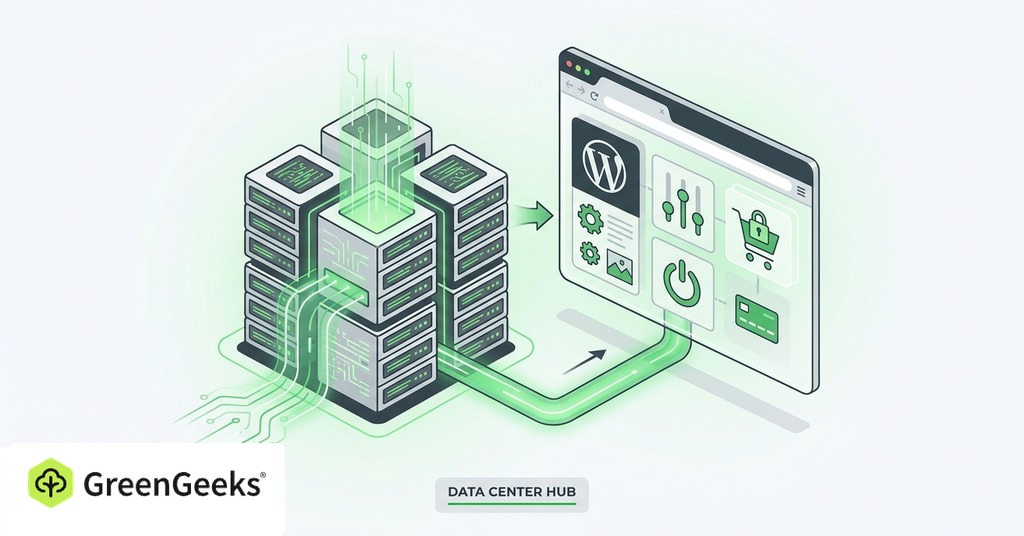
A data center is a building designed to keep computing equipment running continuously. Inside are servers, storage systems and networking gear, along with the support systems that equipment depends on, meaning redundant power feeds, industrial cooling, layered physical security and connections to several internet carriers. Fire suppression and environmental monitoring are standard in enterprise-grade buildings, which also keep operations staff on site around the clock.
That support layer, rather than the servers themselves, is most of what a site owner is buying. Roughly 12,000 operational data centers run worldwide. The United States holds about 45% of them, though counts vary by tracker because no single global registry exists.

These are industrial plants. People who live near the newest ones describe round-the-clock mechanical sound from cooling systems and generator testing. The power draw and heat rejection behind that sound also show up in the global figures. Data centers consumed about 415 TWh in 2024, roughly 1.5% of global electricity. Projections put that near 945 TWh by 2030.
What Is Inside a Data Center
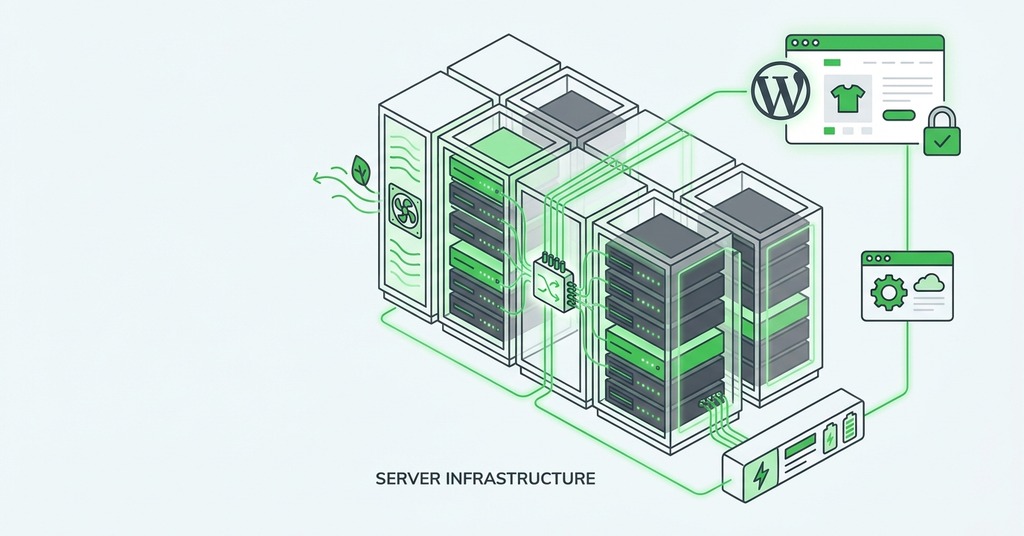
The computing equipment is one half of a data center. The power, cooling and network plant that keeps it running is the other half.
The Servers and Racks
Servers are the computers that run websites and applications, including the databases behind them. They mount in standardized racks that are typically 42U tall, with storage arrays and network switches fitted alongside them. An open frame is a rack, a closed enclosure with doors and side panels is a cabinet, and a mesh-walled subdivision inside a colocation hall is a cage.
The Power Chain
Power enters through more than one utility feed and passes through an automatic transfer switch. A battery system, the uninterruptible power supply, carries the load between the grid failing and the generators reaching speed. Backup generators take over from there. Power distribution units at each rack feed the individual servers. Any failure along that chain takes the site down and puts a limit on whatever uptime a host guarantees.
Cooling and the Hot Aisle/Cold Aisle Layout
Servers give off heat constantly, and electronics fail faster when they run hot. Computer room air handlers and chiller plants remove it. High-density racks are increasingly cooled by outside air or by liquid.
The classic layout, originated by IBM in 1992, lines up racks so the server intakes face each other in a cold aisle and the exhausts face each other in a hot aisle. Newer builds seal one aisle with doors and roof panels so hot and cold air cannot mix, a practice called containment.
Workers describe cold aisles as windy, and loud enough that veterans tell first-timers to bring ear protection. Because cabling terminates at the back of the rack, technicians cannot avoid the hot aisle. Sustained heat shortens hardware life. Containment has brought some floors closer to room temperature, but plenty of older halls are cold and loud.
The Network Side
Facilities connect to the internet through multiple carriers whose fiber enters the building, so a single provider failure does not take a site offline. Colocation buildings include a meet-me room, a shared space where tenants cross-connect directly to carriers, to clouds and to each other. Cross-connects there are physical fiber patches. Traffic crossing them never touches the public internet. In a building like Equinix’s, whose operator runs more than 260 colocation facilities, interconnection is what a tenant pays for.
Who Certifies Tier Labels and What They Cost
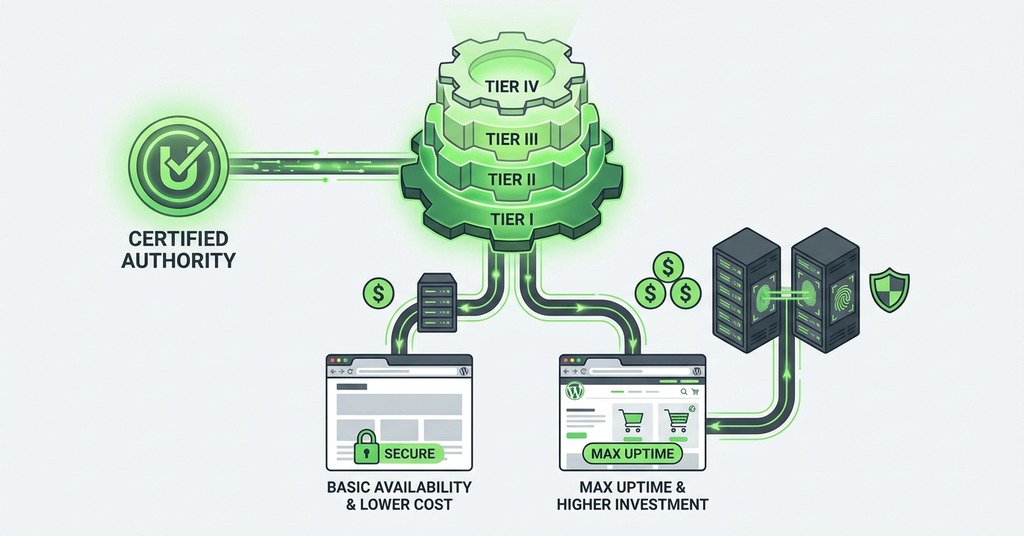
The Uptime Institute created the tier classification in the mid-1990s, and it remains the only organization permitted to certify against it. The four levels describe how much failure a facility can absorb, and the two a hosting buyer will see quoted are Tier III and Tier IV. Tier III is concurrently maintainable, meaning any component can be serviced without downtime, and it delivers 99.982% availability. Tier IV is fault tolerant, with fully duplicated systems, at 99.995%.
Treat a tier label on a hosting page as unverified until it appears in the Institute’s register. Terms like Tier III+ have no basis in the standard. Every legitimate certification is listed on the Institute’s website. In 2015 the Institute stopped issuing design-document certifications to North American commercial providers, because companies were marketing Tier III design as if the finished building had been certified.
Tier IV is not automatically the goal. The right tier depends on what an hour of downtime costs the business, and Tier IV construction routinely costs twice what Tier III does, buying reliability many websites will never need.
Hyperscale Campuses and Colocation Landlords
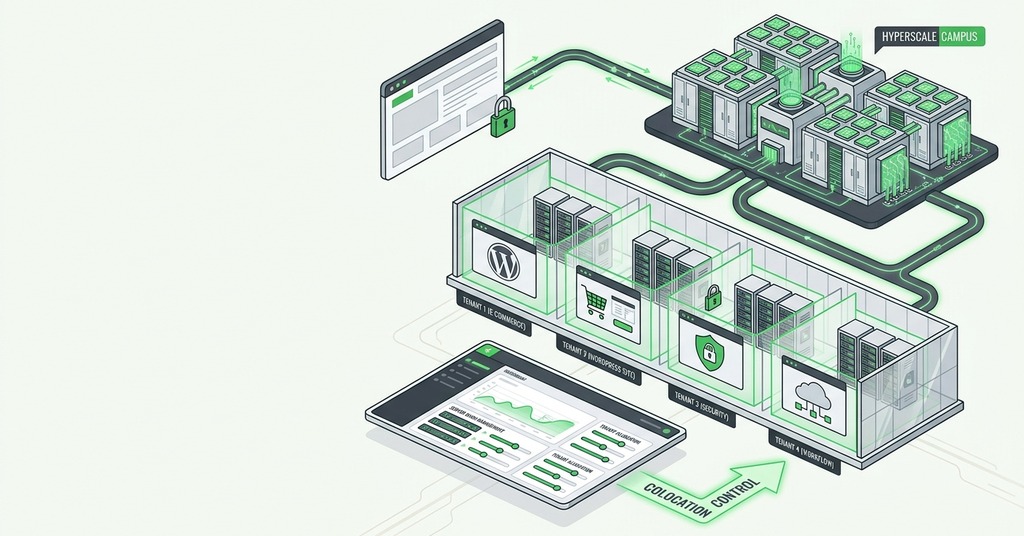
Enterprise facilities are built by one company for its own systems. They give that company high control at low utilization. Fewer companies run their own each year as workloads move to cloud and colocation. Hyperscale campuses are the exception. Amazon, Microsoft and the other large cloud companies run facilities of 5,000 or more servers, and those sites numbered about 1,300 by the third quarter of 2025, double the count of five years earlier. The largest AI campuses now draw close to a gigawatt.
Colocation is the landlord model, and most of the web is inside a colocation building. Operators such as Equinix build and run the facility. Equinix coined the term IBX for its facilities in 2013, when it had 95 of them. The count has nearly tripled since. Tenants rent anything from a few racks to a private hall for servers they own.
Many first-time site owners assume the cloud is a separate kind of place. Cloud services run inside hyperscale data centers, and the word names a way of selling computing rather than a location.
Your Web Host’s Role Inside a Data Center
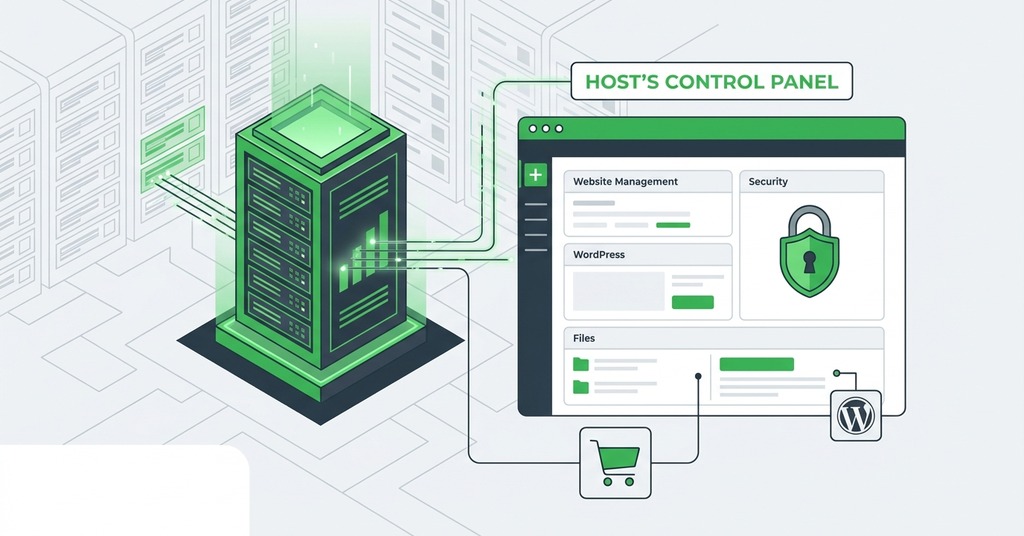
A web host is usually a tenant in the model above. It owns or leases servers, racks them inside a colocation facility owned by someone else, and divides the capacity into shared, VPS, dedicated and reseller plans.
That arrangement is standard across the industry. GreenGeeks works the same way. Its servers, LiteSpeed machines with NVMe storage in RAID-10 arrays, are in third-party facilities in Chicago, Montreal, Amsterdam or Singapore, and customers pick a region at signup.
That tenancy also caps what a host can promise. A host renting racks cannot deliver more reliability than the building’s power and carriers provide, no matter what its SLA says.
When you evaluate a host, ask which facilities it uses and what tier they are certified to. A host that answers with a verifiable certification and a measured uptime history is showing the foundation under its guarantee. One that answers with a tier label and nothing else is offering a marketing claim in place of a certification.
How a Request Travels from the Data Center to a Visitor
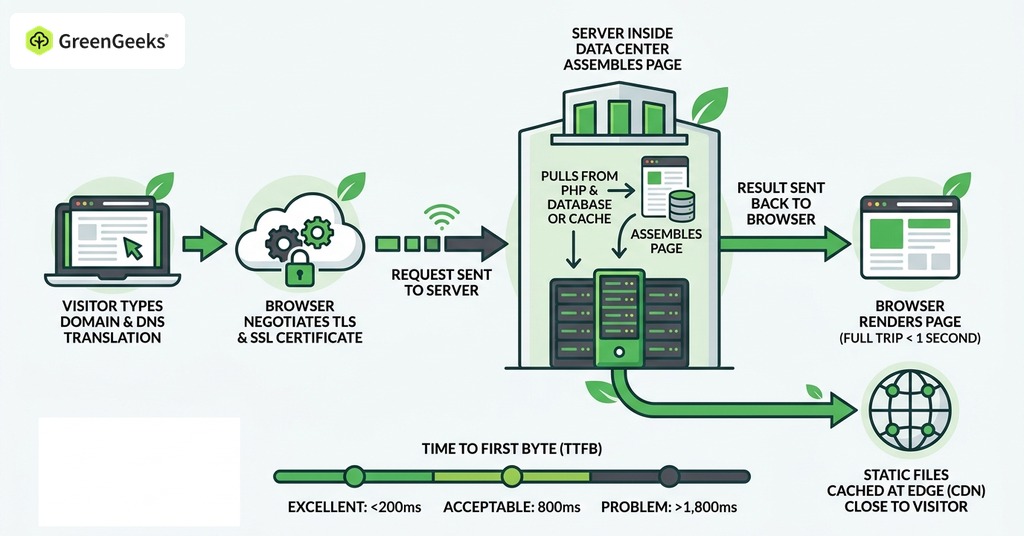
When a visitor types the domain, the browser asks the DNS system to translate the name into the server’s IP address, working through a resolver to the domain’s authoritative nameserver. The browser then opens a connection to that address and negotiates TLS to verify the site’s SSL certificate. Only then does it send the request for the page.
The server inside the data center takes over from there. It pulls what it needs from PHP and the database, or from the cache, assembles the page and sends the result back for the browser to render. The full trip usually completes in under a second. Time to First Byte measures everything up to the first byte returning. Anything under 200ms is excellent, 800ms is acceptable, and past 1,800ms there is a problem to find.
A site hosted in Chicago can load quickly in Sydney because of the CDN. Static files such as images and stylesheets are cached at edge locations close to the visitor. Only dynamic requests travel all the way back to the origin server in the host’s facility.
Does Data Center Location Matter for Your Website
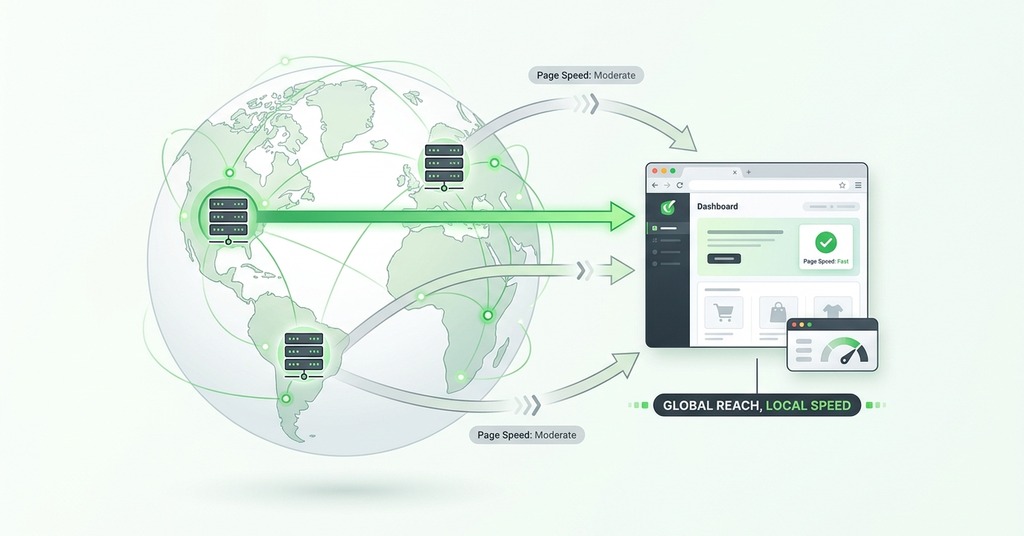
Distance adds latency to every request that reaches the origin server, so a region near the main audience shortens every one of those round trips. A CDN narrows the remaining gap further. For a typical small site without streaming or heavy traffic, connectivity quality outweighs raw geography.
Most hosts provide a region choice at signup. Changing regions later is a routine migration. Choose a host for network quality and measured uptime first, then pick the region nearest the audience from the locations it offers.
Frequently Asked Questions
What Is a Data Center Used For?
Data centers run anything that has to stay available around the clock, from websites and email to banking and streaming. Cloud and AI workloads run on the same floors, and most people touch several of them daily without knowing where they are.
How Does a Data Center Connect to the Internet?
Multiple network carriers bring fiber into the building. One provider failing does not take the facility offline. In colocation facilities the cross-connections are physical fiber patches made inside the meet-me room, which means traffic between a tenant and a carrier never has to touch the public internet.
What Is a Colocation Data Center?
A shared facility. The operator provides the building along with its power, cooling, security and carriers. Equinix is the largest operator. Many companies rent racks or cages inside these buildings for servers they own.
What Is a Hyperscale Data Center?
A very large facility, generally at least 5,000 servers and 10,000 square feet, built to scale rapidly for cloud and AI workloads. The biggest contain over a million servers.
What Is the Difference Between a Data Center and the Cloud?
A data center is the building. The cloud is computing sold as a service, and it physically runs inside data centers, usually hyperscale ones operated by Amazon, Google or Microsoft.
What Is the Difference Between Tier 3 and Tier 4 Data Centers?
Tier III is concurrently maintainable. Any component can be serviced without taking the site down, at 99.982% availability or about 1.6 hours a year. Tier IV is fault tolerant, with fully duplicated systems, at 99.995% or about 26 minutes a year. Building to Tier IV costs roughly twice as much, which is why it is normally reserved for financial exchanges and hospitals.
How Many Data Centers Are There in the World?
Roughly 12,000 operational facilities worldwide, with about 45% of them in the United States. Counts vary because no single global registry exists. Hyperscale facilities specifically numbered about 1,300 by the third quarter of 2025.
How Much Electricity Do Data Centers Use?
About 415 TWh in 2024, roughly 1.5% of global electricity, per the International Energy Agency. Its base case projects about 945 TWh by 2030. In the United States, Lawrence Berkeley National Laboratory puts 2024 use at 192 TWh, or 4.7% of national consumption.
Why Are Data Centers So Cold?
Servers generate constant heat and fail faster when hot, so facilities drive chilled air through cold aisles at the server intakes and capture the exhaust in hot aisles. ASHRAE’s recommended inlet range for server hardware is 18 to 27 degrees Celsius.
Where Is My Website Physically Located?
On a specific server inside a rack in a specific data center in a specific city. With shared hosting that server is shared with other sites. Ask a host and it will name the facility and the region it uses.
Are Data Centers Secure?
Facilities combine physical controls such as fencing and biometric access with cameras, firewalls and monitoring systems. Enterprise-grade sites also run 24/7 operations staff and pass compliance audits like SOC and PCI DSS.