
The website categories making the most money in 2026 are productized service sites, vertical SaaS, niche affiliate publications backed by a named expert, and verticalized two-sided marketplaces. Plain content blogs and thin affiliate sites still work, but they face a tougher search environment because Google AI Overviews have compressed publisher click-through rates by roughly a third since late 2024. The 45 ideas below are grouped into eight categories, with realistic capital requirements, monetization paths, and named examples where they exist.
Profitability Criteria for 2026 Websites
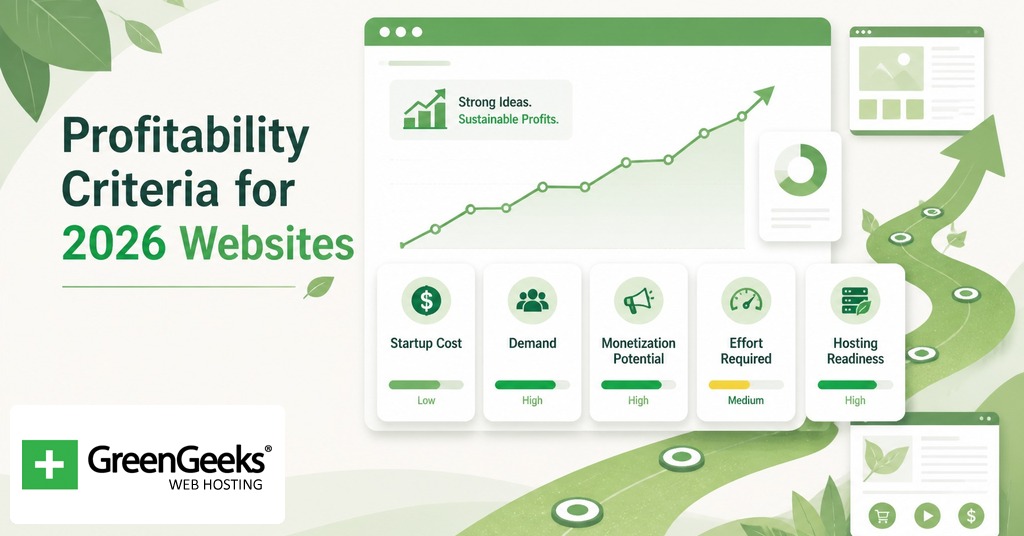
A profitable website in 2026 needs four things at once. It needs a traffic source it does not rent. It needs a monetization model that fits the audience. It needs some defense against AI summaries skimming the answer before a reader clicks. And it needs a startup cost the operator can absorb while traffic compounds.
Search traffic alone is no longer sufficient. According to Chartbeat data published in the Reuters Institute 2026 trends report, global search referrals to publishers fell about 34% between December 2024 and December 2025. Sites that survived that drop did so by combining search with email, community, paid, or social distribution. The successful operators in 2026 build at least two acquisition channels from the start.

Monetization fit matters more than monetization stacking. A productized service site that charges $5,000 per month produces more profit than the same audience reading display ads. A finance blog earns RPMs of $30 to $50 per thousand pageviews, while a recipe blog earns $5 to $12 (MonetizeMore 2026). The right monetization for a niche is the one that converts the audience already there.
Defensibility against AI Overviews now defines the long-term ceiling for content sites. AI summaries reproduce thin commodity content in seconds. They cannot reproduce a named author with credentials, original first-party data, an owned email list, branded community, or proprietary on-page tools. Sites cited inside AI Overviews earn 35% more organic clicks and 91% more paid clicks than uncited competitors, per AdExchanger 2026 reporting.
The table below summarizes the eight categories used in the rest of this article, with realistic capital ranges and time-to-revenue benchmarks pulled from the research above.
| Category | Best for | Capital required | Time-to-revenue |
| Content and affiliate sites | Writers and subject experts | $50 to $500 | 12 to 24 months |
| E-commerce and physical goods | Brand-builders | $500 to $5,000 | 1 to 6 months |
| Productized service sites | Freelancers and consultants | $200 to $2,000 | 30 to 90 days |
| Education and online courses | Teachers and practitioners | $500 to $3,000 | 3 to 6 months |
| Marketplaces and two-sided platforms | Operators with seller access | $5,000 to $50,000 | 6 to 18 months |
| SaaS and web tools | Builders and product engineers | $2,800 to $200,000 | 6 to 18 months |
| Communities and memberships | Community organizers | $200 to $1,500 | 3 to 9 months |
| Local lead generation and directories | Local SEO operators | $200 to $1,000 | 30 to 120 days |
Time-to-revenue and capital are not the only filters worth applying. Operator skill is often the binding constraint. A working CPA productizing tax services for one industry reaches paying clients in weeks. The same operator pivoting to print-on-demand or a marketplace launch starts from zero in audience and zero in supply. The strongest predictor of profitability in this dataset is how directly the website attaches to a skill or audience the operator already controls.
Content and Affiliate Sites
Content websites still pay, but the model has narrowed. The publishing approach that worked in 2018 (broad keyword targeting, surface-level posts, AdSense at the top) has lost most of its margin. The seven ideas below replace breadth with vertical depth. The move toward original first-hand reporting, named credentials, and owned distribution channels is the largest factor separating profitable content sites from declining ones in 2026.
1. Single-Person Authority Blog
A blog written by one named expert in one specific topic. Personal finance for early-career attorneys, woodworking joinery, or postpartum recovery for endurance runners are realistic vertical examples. The author shows credentials, a face, original photos, and primary-source references. Monetization is a mix of affiliate links to professional tools, sponsored deep dives, an email list, and a small paid product. Sites in this format that publish weekly for 18 months commonly reach 10,000 to 80,000 monthly visits.
2. Niche Personal Finance Site
Personal finance micro-niches generate a $9,100 monthly median income at maturity (Elementor 2026). A site focused on a single audience segment (federal employees, traveling nurses, recent immigrants building U.S. credit history) outranks broad finance sites because the question set is smaller and answers go deeper. RPMs in finance are $30 to $50, the highest of any common ad niche.
3. AI-Tool Review Hub
The AI-tool directory model reportedly produces $50,000 to $500,000 in monthly revenue for top operators (Backlinko AI directory analysis 2025). Revenue comes from three layers: affiliate commissions on subscription tools, paid sponsored placement on category pages, and a small subscription tier for premium reviews. Capital required is low, but the niche is crowded. Defense comes from real testing video and a public methodology.
4. Vertical Coupon and Deals Site
A coupon site narrowed to one buyer (homeschool families, indie game developers, small-batch bakers) avoids the saturated horizontal coupon market. Tracked-link commissions run 4% to 8% per transaction. RetailMeNot generated over $200 million annually at peak as a horizontal site; vertical alternatives now ride the same model with smaller audiences and better margins.
5. Local City Guide
Hyperlocal sites that cover one mid-sized city with original event listings, restaurant write-ups, and neighborhood guides remain defensible because Google still favors local first-party content. Revenue mixes display ads, sponsored business profiles, a paid newsletter, and event ticket affiliate fees. Capital is low; the cost is time and being there in person to photograph and verify listings.
6. Long-Form Investigative Newsletter
A long-form investigative publication on Substack or beehiiv, focused on one industry and selling at $10 to $20 per month. The top ten Substack publications collectively earn over $40 million per year from paid subscribers. At 25,000 subscribers with a 5% paid conversion, an operator clears six figures from one weekly piece.
7. Specialty Recipe Archive
The honest version of this idea: recipe-site traffic from search dropped 25% to 40% in 2025-2026 because AI Overviews now answer most cooking questions inline (Mediavine Q4 2025 publisher report). The recipe sites that retained traffic did so through video integration, branded community, named-author credentials, and an owned email list. A recipe site is still profitable, but only when the operator builds those moats from day one.
E-commerce and Physical Goods Stores
Global B2C e-commerce is forecast at $3.88 trillion in 2026 (Statista) and total e-commerce including B2B at $7.41 trillion to $8.1 trillion. The category is enormous and the entry bar is low, but margins compress fast against ad costs. The seven ideas below are the most realistic shapes a small operator can launch.
8. Branded Niche DTC Store
A direct-to-consumer brand built around one product line for one buyer (wide-foot running shoes, allergen-free baking mixes, climbing-specific skincare). Capital required is $2,000 to $20,000 for first inventory, photography, and Shopify setup. Net margins reach 30% to 60% once organic and email channels mature. The defensibility comes from brand recognition, not the product itself.
9. Print-on-Demand Apparel Store
Print-on-demand stores connected to a Shopify or Etsy storefront average $500 to $5,000 per month after ad costs, with top operators clearing $50,000 monthly (Sellvia 2026, Shopify Merchant Reports 2026). Net margins run 10% to 25% because the print-fulfilment partner takes the production margin. The model rewards unit economics discipline and tight design niches.
10. Subscription Box Site
A monthly box for one community (cosplay accessories, sourdough starters, indie tabletop game props). Subscription e-commerce is projected at $859.52 billion globally in 2026. Member lifetime value averages $846.81. The advantage of the model is recurring revenue. The disadvantage is that churn compounds against acquisition cost; sites with fewer than 12-month median tenure tend to fail.
11. Curated Resale Marketplace Storefront
A buy-and-resell site for vintage cameras, restored mechanical watches, or rare board games. The operator authenticates, photographs, and ships. Margins are 30% to 100% per item. Inventory is the bottleneck. This is closer to a retail store than a tech business, but it produces real cashflow within months.
12. Made-to-Order Craft Store
A small-batch craft operation where each piece is built to order, often through Etsy or a self-hosted store. The Etsy 2024 GMV reached $13.6 billion, and the platform retains the second-largest share of handmade-goods traffic. Sales velocity is slower than print-on-demand, but the average order value is higher and margins are stronger.
13. Pet Niche Specialty Store
Pet products outperform on Lifetime Value because owners purchase consistently for a decade or more per pet. A vertical example: senior-dog mobility gear, exotic-bird supplies, or competition-grade dog-sport accessories. Display-ad RPMs in the pet niche run $10 to $25.
14. Sustainable Goods Store
A storefront curating products by verified sustainability criteria (recycled fiber, repairable design, transparent supply chains). The opportunity is real but the operator needs primary verification, not marketing claims, since shoppers increasingly catch greenwashing. A documented audit trail on each product page is the differentiator.
Productized Service Sites
Productized service sites are the fastest-to-revenue category in this list. They look like stores, list a fixed price, and replace the consultative-sales process with a one-click signup. Capital required is low. The ceiling is high if the operator picks a vertical with budget.
15. Unlimited Graphic Design Subscription
DesignJoy is the canonical example: one founder, $5,995 per month, unlimited design requests, no employees, well past seven figures in annual revenue. The model is defensible because the operator caps each client’s active queue and rotates through requests methodically. Revenue per hour is the highest of any solo design business shape.
16. Bookkeeping for a Single Industry
Bookkeeping productized to one industry (Etsy sellers, Shopify dropshippers, indie game developers, dental practices) sells at $200 to $800 per month per client. Bench scaled to tens of thousands of customers with a similar pitch (a real bookkeeper backed by software). A solo operator can handle 30 to 60 clients before hiring.
17. Landing-Page Audit Service
Roast My Landing Page sells a 15-minute personal video audit for $350. No tiers, no upsells, no consultation. The operator delivers within three business days and moves on. This is the simplest possible productized service: one deliverable, one price.
18. Logo and Brand Asset Service
Photologo charges $49 for a custom handwritten signature logo with three free revisions and no consultation calls. It works because the operator built one asset (calligrapher capacity) and applied it to one demand (signature logos for solo professionals). The pattern generalizes.
19. SEO Content Production for One Vertical
A productized content service that writes blog content for one industry only, at a fixed monthly word allotment, fixed price, and standardized brief format. Selling to dental practices, insurance brokers, or law firms reduces sales cycles and turns research into a scaled asset. Pricing typically ranges from $1,500 to $5,000 per month per client.
20. Resume and LinkedIn Rewrite
A flat-fee resume rewrite plus LinkedIn profile pass, priced $300 to $900. The operator can deliver three to six per week solo. Audience access comes through career-coaching newsletters, university alumni groups, and LinkedIn organic content from the operator’s own profile.
21. Video Editing for Creators
A subscription video-editing service for YouTube creators or short-form-video accounts, priced $1,000 to $4,000 per month per client. Turnaround is 24 to 48 hours per video. The market is large because YouTube creator earnings have compounded with the creator economy reaching $214 billion to $250 billion in 2026 (Research Nester).
Education and Course Websites

The global e-learning market is projected at $320 billion to $400 billion in 2026, with the U.S. alone accounting for $99.84 billion. Course websites monetize directly without dependence on ad networks, which makes them more resilient to AI Overview pressure than free content sites.
22. One-Topic Online Course Site
A site selling a single course on one specific skill (Excel for accountants, Adobe Premiere for documentary editors, basic SQL for product managers). The course is priced $99 to $499, supported by a small free email lesson series. Course creators in this shape commonly earn $2,000 to $15,000 per month once the funnel matures.
23. Cohort-Based Course Hub
Cohort programs run live in 4-to-8-week sessions at $800 to $3,000 per seat. Enrollment is capped, the operator participates in live sessions, and outcomes are coached. Cohort programs charge multiples of self-paced video courses because the price reflects access, not information. The model rewards a strong personal brand and named author.
24. Tutoring or Test-Prep Site
A site that combines paid tutor matching with self-study materials for one exam (LSAT, MCAT, NCLEX, AP Calculus). Operators charge $80 to $200 per tutoring hour, plus $40 to $200 for prep packages. The audience refreshes every academic cycle, which means consistent acquisition demand.
25. Children’s Educational Site
Educational content and printable workbooks for one age band (preschool, early elementary, middle-school math). Monetization mixes a low-priced printable shop, a paid membership tier, and YouTube ad revenue from companion video content. Children’s content is hard to monetize through display ads due to COPPA restrictions, so direct sales matter more.
26. Trade-Skill Video Library
A subscription video library for a specific trade (HVAC technicians, electricians, automotive specialists) sells at $30 to $100 per month per subscriber. The audience is small but high-intent. Operators with trade credibility sustain $20,000 to $80,000 monthly recurring revenue with libraries of 200 to 600 videos.
27. Language-Learning Niche Site
A language site for one specific learner profile: business Spanish for healthcare workers, conversational Mandarin for adoptive parents, formal Japanese for academic researchers. The narrowing is what allows the operator to outrank generalist apps for the long-tail terms.
28. Certification-Prep Hub
A site dedicated to one professional certification (PMP, AWS Solutions Architect, CFP, CompTIA Security+). Sells at $99 to $499 per prep package, plus a recurring practice-exam subscription. Audience funnel comes from search-driven question pages that double as content.
Marketplace and Two-Sided Platforms
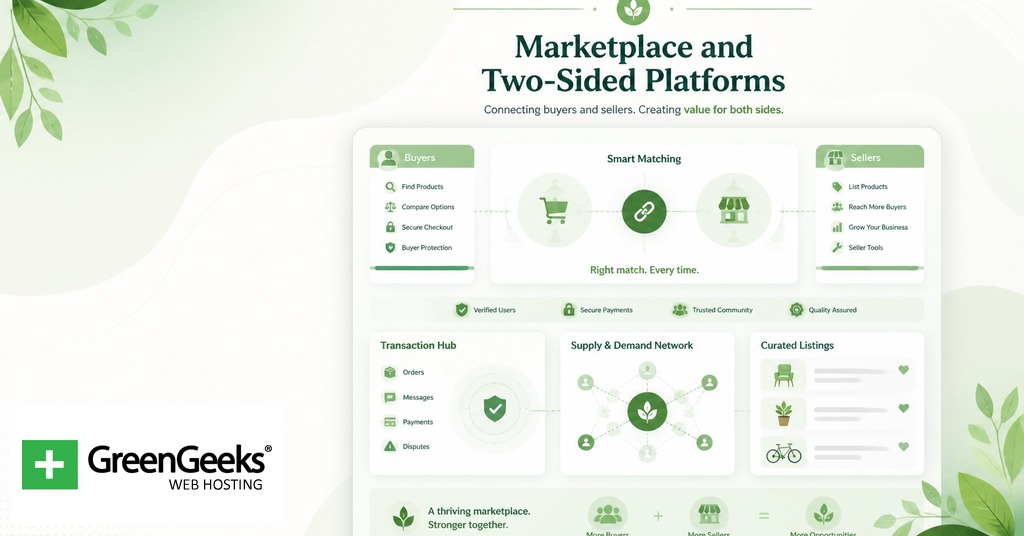
Marketplaces are the hardest websites in this list to start because they require liquidity on both sides at once. Capital and time-to-revenue are higher. The ones that work, however, build moats that competitors cannot easily replicate. Vertical marketplaces consistently outperform horizontal ones in 2026 (Roobykon 2026). The supply-first launch pattern (manually onboard 10 to 50 high-quality sellers, give them waived fees and concierge support, and only then open to buyers) is the most-cited path to early liquidity in 2026 founder interviews.
29. Vertical Service Marketplace
A marketplace connecting a specific service provider type with the buyers who hire them. Bookpoets connects clients booking poets for events. Instagrooms matches horse owners with traveling equestrian grooms. Paxxie matches photographers and videographers with bookings. The operator earns a take rate of 8% to 20% per transaction.
30. Niche Job Board
Niche job boards remain among the most defensible content site models. RemoteOK and We Work Remotely earn over $1 million annually from $200 to $300 listing fees with minimal staff (IncomeDiary 2026). The most resilient examples are vertical: data engineering jobs, Rails-stack jobs, design jobs at agencies under 30 people.
31. Stock-Asset Marketplace
A marketplace for one asset type (drone footage, ambient music, technical illustrations, 3D-printable STL files). Per-download earnings range $0.20 to $5.00 with 30% to 70% paid out to contributors. The operator’s job is to attract supply (creators) first, then demand (buyers) follows.
32. Rental and Equipment Booking Site
Peer-to-peer rental for one product category: camera gear, mountain bikes, party event rentals, RVs in a single state. Operators take 10% to 25% of each booking. Insurance and damage policy handling are the operational moat that fends off Craigslist-style alternatives.
33. Handmade Goods Marketplace
A marketplace for one type of handmade good (leather goods, ceramics, hand-bound journals) with curated supply. The operator handles vetting, photography, and shipping standards. Sales velocity is lower than Etsy, but average order value and margin are higher because curation justifies a price premium.
34. Specialty Class and Workshop Marketplace
A booking marketplace for in-person specialty classes within a metro area: glassblowing, blacksmithing, sourdough courses, climbing fundamentals. Operators earn 15% to 25% of each booking. The defensibility is local supply, which is hard for outside operators to replicate without on-the-ground recruiting.
SaaS and Web Tools
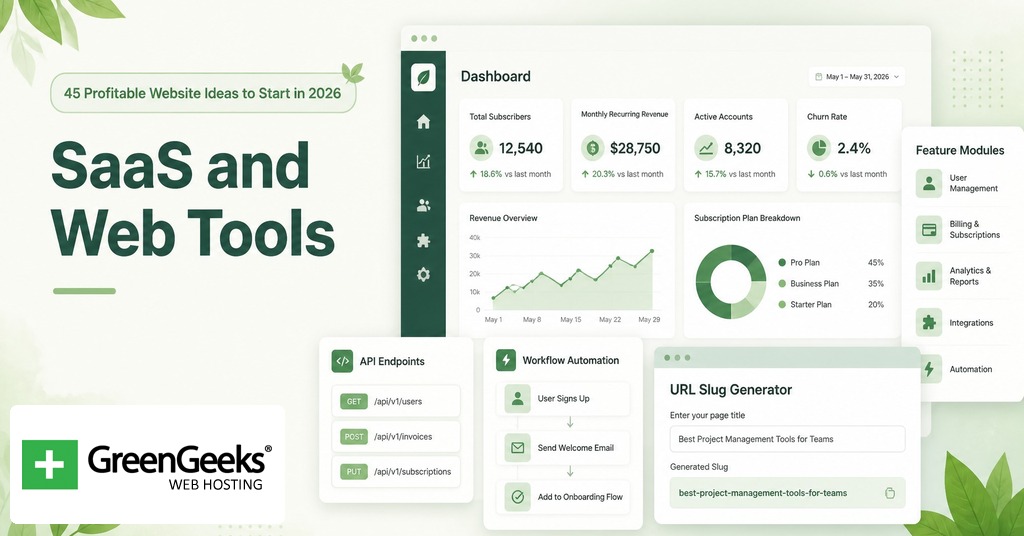
A bootstrapped SaaS MVP costs around $2,800 to launch (WeAreFounders 2026). A user-ready SaaS that can acquire and retain paying customers realistically costs $75,000 to $200,000. Across more than 1,000 micro-SaaS businesses analyzed, 70% generate under $1,000 per month, 1% to 2% exceed $50,000 per month (NxCode 2026). The math is brutal at the bottom and very kind at the top. Survival rates are higher for operators who pre-sell the product to a small set of named buyers before writing the first line of code. The capital sink is engineering time, not infrastructure, and pre-sales reduce that risk meaningfully.
35. Single-Workflow Micro-SaaS
A tool that automates one workflow inside one job role. Examples include a podcast show-notes generator, a Shopify return-policy generator, or an HVAC quoting calculator. Pricing runs $19 to $79 per month per user. Operators commonly grow these to $5,000 to $30,000 in monthly recurring revenue before considering hiring.
36. AI-Wrapper Tool for One Vertical
A focused interface over a foundation model API for one job: legal-brief summarization, real-estate listing copy, QA for clinical trial documents. The defensibility is workflow integration and proprietary prompt libraries, not the underlying model. Operators that win in this category build trust through compliance, not features.
37. Browser Extension SaaS
A Chrome or Edge extension SaaS for one workflow: LinkedIn sales prospecting, ecommerce price tracking, language-learning context capture. Distribution is faster than typical SaaS because extensions surface in the relevant store. Monetization is a free tier plus a paid tier at $9 to $49 per month.
38. Calculator and Estimator Tool Site
A free public calculator wrapped in a content site. Examples: mortgage calculators, retirement planning estimators, freelance-rate calculators. The calculator drives traffic, and the surrounding content monetizes through affiliate links to financial products. This is one of the more AI-Overview-defensible content shapes because tools are interactive.
39. Internal-Tool Builder for SMBs
A builder that helps small businesses spin up internal tools (booking, inventory, CRM) without engineering hires. Pricing typically $50 to $300 per month per business. Capital is higher than micro-SaaS because reliability requirements are stricter, but customer LTV is also higher because internal tools have low churn.
40. Reporting Dashboard SaaS
A reporting dashboard for one vertical (Shopify merchants, ad agencies, real-estate brokerages). The operator pulls from existing APIs, normalizes data, and presents views the source platforms do not. Pricing $79 to $499 per month per account. Defensibility comes from a deep grasp of the vertical’s reporting habits, not from the dashboard tech.
Communities, Memberships, and Local Sites
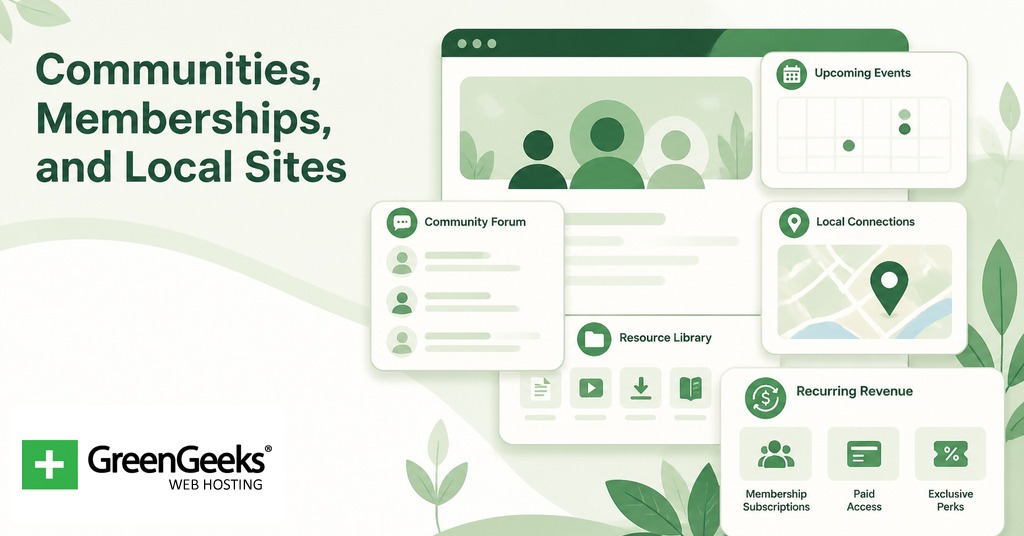
The remaining five ideas combine community, owned-audience, and local-market models. They are smaller in market size than SaaS, but they reach profitability faster and require less capital.
41. Paid Community for a Profession
A paid community for one profession (independent dental hygienists, freelance illustrators, indie hackers building B2B SaaS), priced $25 to $50 per month per member. With 500 paying members, the operator clears $12,500 to $25,000 in monthly recurring revenue. Communities of this shape commonly cross 1,000 members within 18 months when the operator is the host, not the owner.
42. Membership Resource Library
A members-only resource library: vetted templates, scripts, contracts, prompts, or briefs for one job. Pricing runs $99 to $499 per year. Member lifetime value averages $846.81 across the membership-site category (Marketing LTB 2026). The best examples publish new resources weekly to keep retention strong.
43. Paid Newsletter on Substack or beehiiv
A paid newsletter with weekly sends and a free-tier teaser. Independent newsletter operators average $40 to $120 per paid subscriber per year (beehiiv State of Email 2026). A newsletter at 25,000 subscribers with 5% paid conversion at $96 per year produces $120,000 in annual revenue from one operator with no employees.
44. Local Lead-Generation Site
A site that ranks for local service queries (Cleveland HVAC repair, Austin roof inspection, Tampa Bay tree removal) and sells the leads to a contractor. Profit margins reach 80% to 90% once ranked because operating cost is hosting and a domain (Ippei 2026 local lead-gen guide). A single roofing or HVAC lead can be worth several hundred dollars to the contractor.
45. Industry Directory Site
A directory of businesses in one industry, priced as a yearly listing fee ($99 to $999 per listing) plus paid premium placement. The operator earns recurring revenue from listing renewals and one-time revenue from featured placement. The model works in fragmented industries with no dominant directory: independent music studios, mobile-veterinary services, on-site equipment-repair specialists.
Choosing the Right Website for You
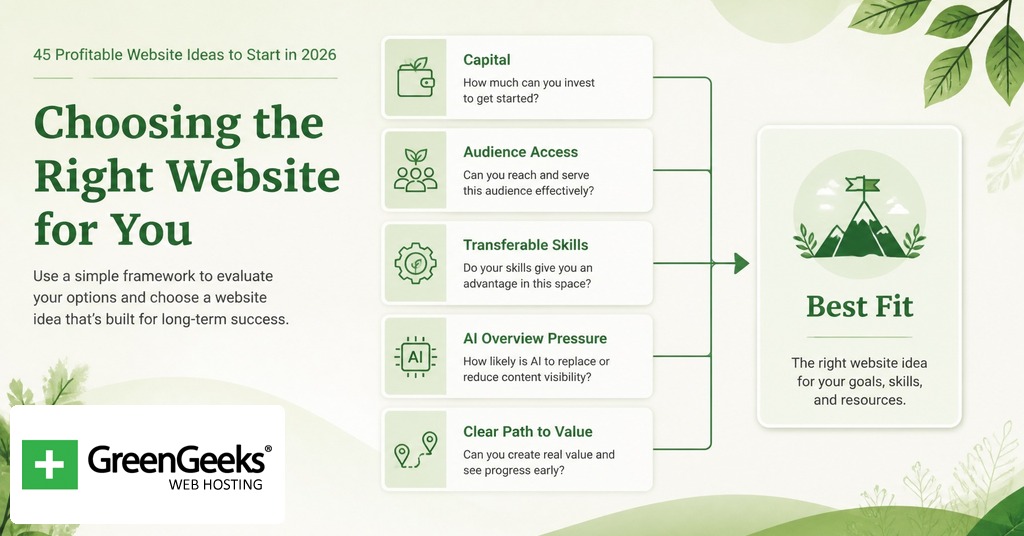
The right idea depends on four questions. First, how much capital can the operator absorb before any revenue arrives. A productized service can launch under $1,000; a working SaaS often runs $50,000 or more before paying customers appear. Second, what audience does the operator already have access to. A practicing CPA has a five-year head start on a CPA-only paid community. Third, what skills carry over. A working video editor productizing video editing for creators reaches paying clients in weeks; the same operator pivoting to print-on-demand starts from zero. Fourth, what level of AI Overview pressure can the operator tolerate. Recipe sites and surface-level affiliate roundups face heavy compression; productized services, marketplaces, SaaS, and community sites face very little.
Two short worked examples make the framework concrete. Operator A is a former civil engineer with $3,000 in capital and 15 years of bridge-design work behind them. The strongest fits are a productized review service for engineering documents, a paid newsletter on infrastructure policy, or a course site teaching FE/PE exam prep. Operator B is a college student with $500 in capital and no professional credentials. The strongest fits are a niche affiliate blog tied to a personal hobby, a print-on-demand store on a topic the operator knows deeply, or a single-vertical browser extension built over a long timeline. Different inputs lead to different right answers, and the framework above is the filter.
A practical exercise: write down the four answers (capital ceiling, accessible audience, transferable skill, AI-Overview tolerance) on one page, then strike out any idea in the list above that fails any of the four. The remaining shortlist is usually three to six ideas. From there, the right pick is whichever one the operator can realistically work on for 90 days without quitting. Founder persistence drives more outcomes in this category than market choice does.
Frequently Asked Questions
What kind of website makes the most money?
SaaS sites and large e-commerce stores remain the highest-grossing categories in absolute terms, with global e-commerce projected at $7.41 trillion in 2026. For solo operators, productized service sites and verticalized membership communities tend to produce the highest profit per hour worked because pricing is direct and overhead is minimal.
Are blogs still profitable in 2026?
Blogs remain profitable when they offer original first-hand insight, named author authority, and depth that AI summaries cannot reproduce. The HubSpot State of Marketing 2026 report ranked blog posts among the top five highest-ROI content formats. Thin commodity blogs lost 25% to 40% of search traffic to AI Overviews in 2025-2026, while specialist sites with named authors retained or grew traffic.
How much money can a website make per month?
A small site with a few thousand visitors typically earns $5 to $50 per month from display ads alone. A medium site with steady traffic earns $200 to $2,000. A site with 500,000 monthly page views earns $1,000 to $5,000 from display advertising, and affiliate, e-commerce, or SaaS layers can multiply that by 5 to 50 times depending on the niche.
Is dropshipping still profitable in 2026?
Dropshipping is still profitable for operators willing to build a real brand, but only 1% to 5% of dropshippers reach consistent monthly profit. Beginners earn $0 to $2,000 per month, intermediate operators $2,000 to $10,000, and top performers $10,000 to $50,000 or more, at net margins of 15% to 25%.
Can a website still make money with AI Overviews active?
Yes. Sites cited inside AI Overviews earn 35% more organic clicks and 91% more paid clicks than uncited competitors, according to AdExchanger 2026 reporting. The path to citation runs through original first-party data, named author credentials, proprietary on-page tools, and content depth that AI summaries cannot reproduce.
