
Alex Juárez, Head of Customer Success at GreenGeeks, attended WordCamp US 2026 and below he is sharing his experience from this year’s event. From Contributor Day to conversations with customers, agencies, and members of the WordPress community, Alex shares some of the highlights and insights he took away from Phoenix.
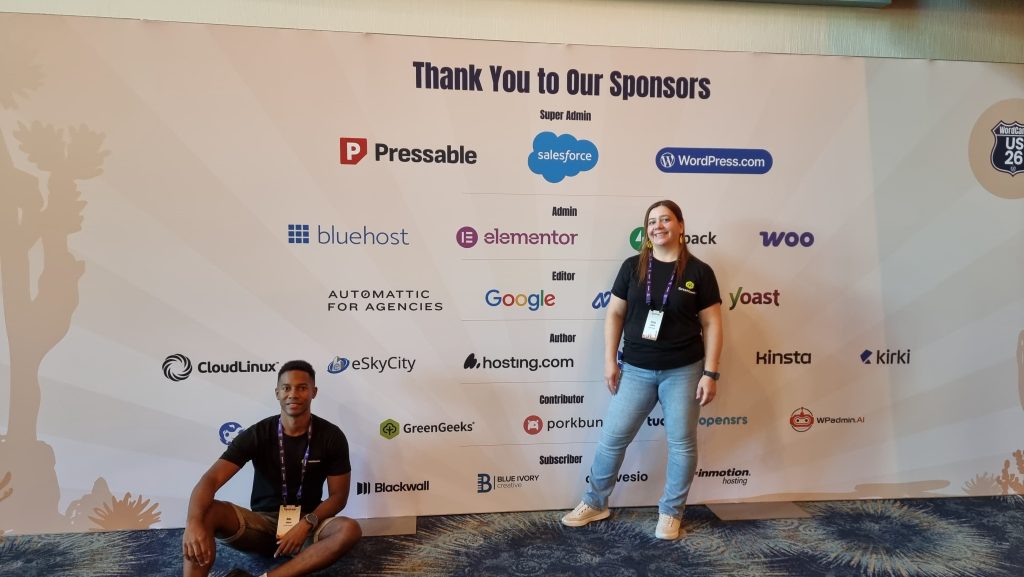
This year, WordCamp US brought me to Phoenix for my fourth WordCamp, and every time I attend one of these events the same feeling becomes stronger: you are not just attending a conference. You are becoming part of a community.
The first year, almost everyone is a stranger. The next year, you start recognizing familiar faces. Then people begin greeting you by name, and some of those industry contacts become friends.

Of course, WordCamp offers great talks, new products to discover, plenty of booths to explore, and some very good swag. But what makes it different for me is the quality of the networking. I have attended dozens of conferences across different industries, and very few have this same openness. People genuinely want to share what they know, talk about their challenges, collaborate, and have fun together.
More Than a Conference
WordCamp US 2026 took place in Phoenix from August 16 to 19, bringing together WordPress users, developers, contributors, agencies, hosting companies, product teams, and other members of the ecosystem for four days of learning, building, and connecting. The program included Contributor Day, Showcase Day, and two conference days.
For me, the biggest value is access to different perspectives. In the same event, you can sit with an agency owner managing dozens of client websites, speak with a customer who uses your service every day, talk with people leading other companies in the industry, and then work side by side with some of those same people on a WordPress community project.
That combination gives you a much clearer picture of where the market is moving, what customers expect, and where companies like GreenGeeks need to keep evolving.
Contributor Day: Competitors in the Market, Partners in the Community
Contributor Day was one of the moments that reinforced that feeling of being part of something bigger.
This year, the format changed. Instead of organizing the day only around contributor teams, projects were organized around specific goals people wanted to complete before the day was over. That new goal-based format made it easier to join an idea based on your interests and skills and, by the end of the day, actually see tangible progress.
I joined an education-focused project. Last year, I had the opportunity to learn more about initiatives such as WordPress Credits and WordPress Campus Connect, which connect students, educational institutions, mentors, and the wider open-source community so young people can develop practical skills in a global environment.
That mission resonates with me. I believe education is one of the pillars that can genuinely improve people’s lives. WordPress Credits is a good example of that idea in practice, giving higher-education students hands-on experience while contributing directly to WordPress.
At our table, we worked on improving the visibility and usability of the Polyglots contributor training program on Learn WordPress. Our job felt a little like a consultancy project: review the current course, follow the guidelines from the project lead, analyze the experience, and document recommendations that future contributor teams could continue developing.
The Polyglots contributor training course helps people learn how to contribute to WordPress translations, including translation quality, locale glossaries, style guides, collaboration, and feedback.
What I enjoyed most was the group itself. I was working alongside people from Automattic, Hostinger, and other organizations that, commercially, can easily be seen as competitors. Yet at Contributor Day that was not the dynamic at all. We were industry partners working on the same problem and trying to leave something useful for the community.
That is something WordPress does very well: you can compete in the market and still collaborate to make the ecosystem stronger.
Listening to GreenGeeks Customers Face to Face
Another highlight was talking directly with GreenGeeks customers.
Some people simply stopped by the booth to tell us they were customers, say hello, and ask us to keep up the good work. Those moments may look small, but they mean a lot. Others took more time to sit with us and talk about what they value, what they worry about, and what they hope to see next.
Our environmental initiatives continue to matter. For many customers, sustainability connects directly with their own values or the values of the clients they serve. Just as important, though, was what they said about our support team.
One customer described it in a way that stayed with me: no company can be perfect all the time, but GreenGeeks shows up when they need us. That is the kind of relationship we want to build.
They also raised an important concern around AI. Some wanted to know whether the future meant replacing people with AI-only assistance. That gave us an opportunity to explain the philosophy we are working toward at GreenGeeks: human-first, assisted by AI.
For us, AI should help people perform better, reduce repetitive work, provide better service, and spend more time on higher-value tasks. It should not make it harder for a customer to reach a human when context, judgment, or real support is needed.
There is also an environmental side to that conversation. AI requires significant computing power, which means greater energy demand. I do not think the answer is to avoid AI or slow down innovation, but to be deliberate about how we use it and where it creates real value.
That is particularly relevant for us at GreenGeeks. Our environmental commitment has always been part of how we think about the impact of technology, and AI makes that conversation even more important. As computing demand increases, so does the responsibility to keep looking for more efficient and responsible ways to support that innovation.
That perspective helped turn some of the concern into curiosity about how GreenGeeks can continue innovating without losing the human and environmental values that brought many customers to us in the first place.
It also reinforced something broader for me: the challenge is no longer simply whether companies should use AI, but how well they implement it. AI can create enormous speed, but friction appears when the system lacks context, produces an inaccurate answer, or cannot handle something outside the expected path. That is where the human layer still matters.
What Agencies Really Want From a Hosting Partner
Some of my most useful conversations in Phoenix were with agency owners.
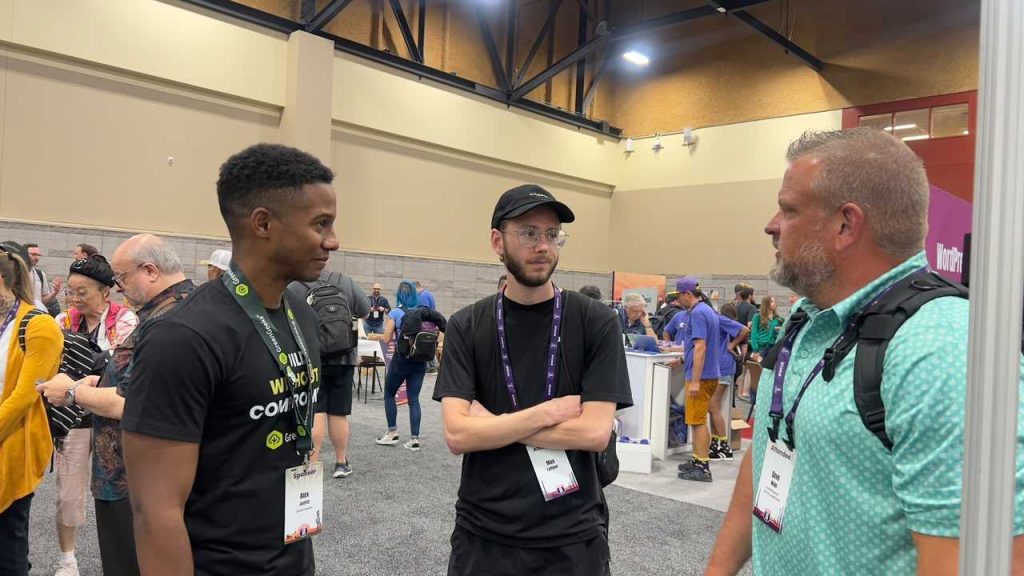
The discussions often started with technology: integrations with their current stack, account security, isolation between customers, protocols, automation, and better ways to manage multiple client environments.
Those needs matter. But as the conversations went deeper, something became even more important than the feature list: they want a long-term partner they can rely on.
Agency owners understand that challenges will happen. A website will fail, a configuration will need to be reviewed, or a migration may become complicated. Their expectation is not that nothing will ever go wrong. What they do not want is to get stuck.
They do not want to waste time receiving generic answers, repeating the same context to multiple people, or trying to figure out who can actually help them. They want strong support and, when possible, a relationship with someone who understands their business.
That was an important reminder: technology matters, but trust is part of the product too.
It is also where I think being an independent company gives GreenGeeks an opportunity. We can stay close to our customers, listen directly, and build relationships that feel personal while continuing to invest in the technology and infrastructure they need to grow.
From an Idea to Something Real in a Single Prompt
Another major theme was how quickly technology is changing the workflows we have been used to for years.
Today, the distance between having an idea and turning it into something tangible can sometimes be a single prompt. Tasks that once required multiple tools, multiple people, or days of work can now happen in minutes. That changes customer expectations.
People expect faster answers, easier integrations, more automation, more intelligent products, and fewer steps between what they want to achieve and the result. This affects every industry, including hosting.
For GreenGeeks, that reinforces the direction of becoming a broader platform where customers can rely on our infrastructure for their digital projects, whether they are building a website, managing client sites, or creating something new. The challenge is aligning people, processes, and technology quickly enough to stay relevant without losing the things customers already trust.
Customers Do Not Live on a Ladder
One idea from Phoenix captured this especially well for me. In her session “AI Search: Why Your Whole Company Should Care,” Emma Young emphasized that customers should not be thought of as moving through a simple ladder. They live across a map of digital touchpoints, and companies need to understand and meet them there.
That made a lot of sense. Companies often describe the customer journey as a clean sequence: awareness, consideration, purchase, onboarding, renewal. Real customers do not behave like that.
They move between search, AI tools, social media, blogs, communities, support conversations, video, messaging platforms, product dashboards, reviews, and recommendations from other people.
The challenge is not just being present everywhere. It is understanding where your customers are, what they need in each place, and making sure the company communicates with one clear and consistent voice.
Why WordCamp Still Feels Different
When people ask why they should attend a WordCamp, I always mention the talks, the learning opportunities, the sponsor hall, and the chance to see what different companies are bringing to the market.
But for me, that is not the main reason. The real value is the community.
It is meeting people who are willing to share what they know, having honest conversations with agency owners and customers about the problems they are actually facing, and working with people from other companies on Contributor Day. It is seeing familiar faces from previous years and realizing that those connections have become real relationships.
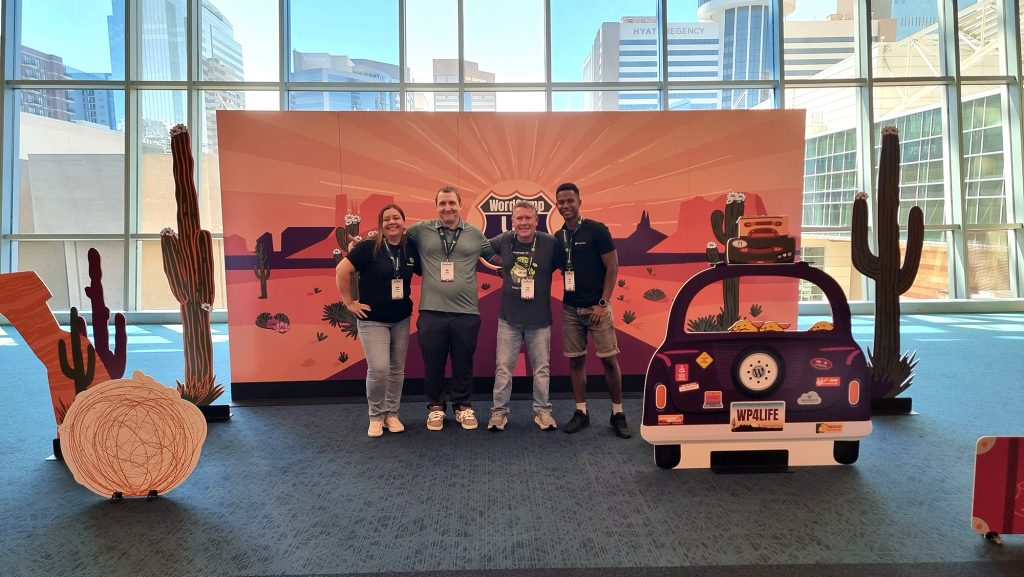
Every WordCamp reinforces that feeling of being part of something bigger. And there is an energy you bring back to the company afterwards. You return wanting to test new ideas, improve things, build better products, create better experiences, and put into practice what you learned from those conversations.
Phoenix left me excited about where WordPress is going and confident about the direction GreenGeeks is taking. Technology will continue to change quickly, and customer expectations will change with it. Our job is to keep listening, keep evolving, and keep combining innovation with the human relationships and values that made people trust us in the first place.
That balance – better technology, closer relationships, and a community willing to build together – is what makes the future feel exciting.
Until the next WordCamp.
