
The work starts with talking to people who match the customer you have in mind, plus reading the reviews of whatever those people already buy. Neither costs anything but time. Most first stores open to an empty dashboard and stay that way for weeks.
Spending starts only after a stranger outside your family has paid, and even then it starts small. A domain at $10 to $20 a year and a marketplace listing at $0.20 can be the entire first month of spending.
Why Validation Comes Before Everything Else
In CB Insights’ analysis of 431 venture-backed startups that shut down, poor product-market fit was cited in 43% of cases. Running out of capital was cited more often, at 70%, but that is usually the last step rather than the cause. The money goes on building something buyers never confirmed they wanted.

Founders who fail once and try again do only marginally better on the second attempt. The gain comes from sequencing rather than talent. The second store gets built in a different order, with the demand question answered before any of the money goes out.
The founder of the womenswear brand Emilia George paid $16,000 for an agency-built first website in 2019 and calls it one of her biggest regrets. The store she runs today is maintained in-house, in one or two hours a month. A full custom build before anyone has paid turns a cheap test into an expensive one, and the expense buys no information the founder did not already have.
What You Can Learn for Free
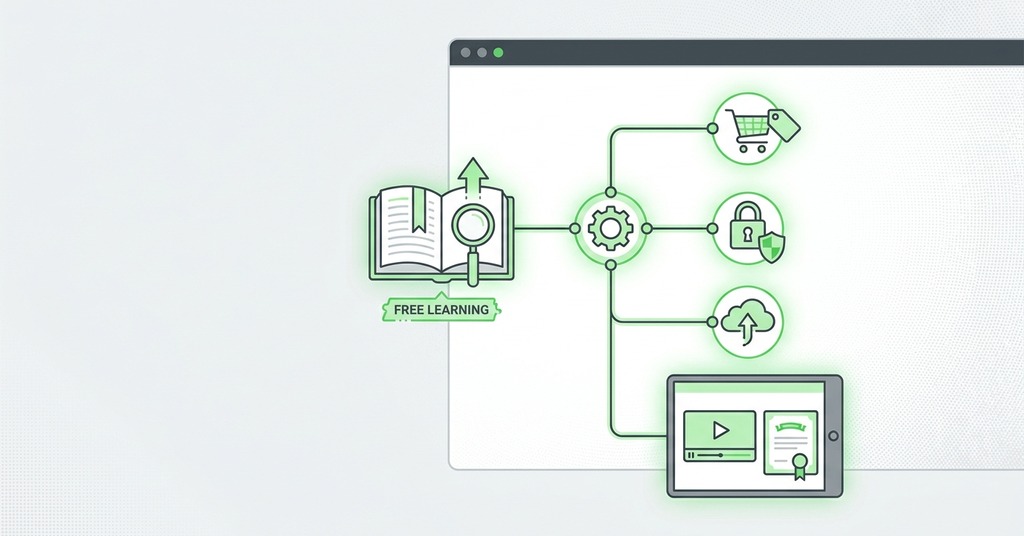
All of the work that answers whether a store has a market is free and happens before a platform is chosen.
Customer Conversations That Get Honest Answers
A common early target is 10 to 20 focused conversations with people who match the exact customer profile. Ask about past behavior and current workflow, and never ask whether they like the idea. People offer polite encouragement instead of the truth, which tells you nothing about whether they would pay.
Reading Complaints as Market Research
Competing products already have their critics. The two-star and three-star reviews are the cheapest demand research available. They show the repeated complaints a new store can answer. Niche forums and subreddits work the same way if they are searched for phrases like “looking for a tool that” or “anyone else struggling with.”
Running-clothing catalogs have been assembled this way, out of months spent in runners’ forums reading complaints about shorts and about headbands that slipped. The product list comes from strangers’ frustrations rather than from a brainstorm.
How to Prove Demand Before You Spend
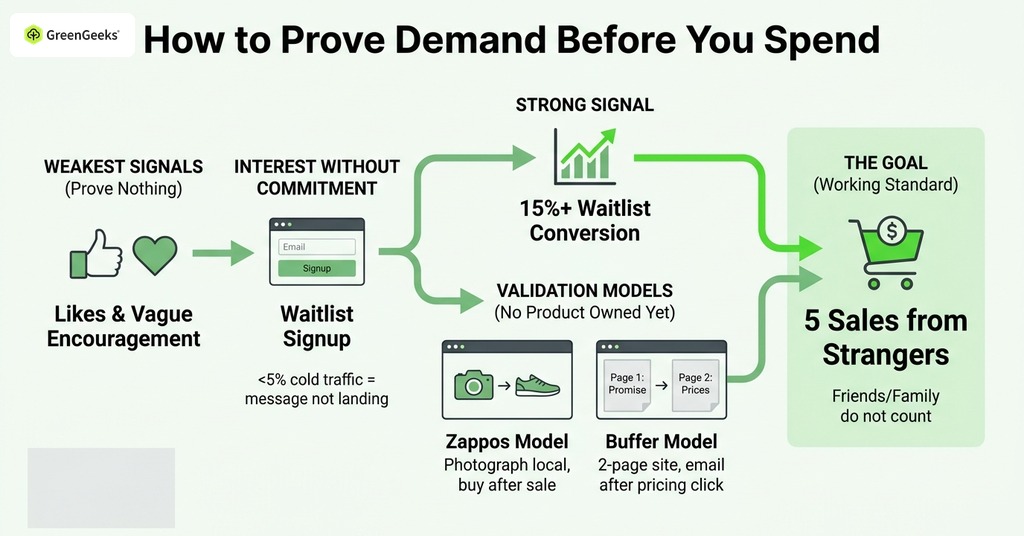
Validation signals form a rough hierarchy topped by a stranger paying in full, and the weakest ones are the easiest to mistake for progress. Likes and vague encouragement prove nothing about willingness to pay. A waitlist signup shows interest without commitment, though the conversion rate is worth reading. Under 5% visitor-to-signup from cold traffic means the message is not landing, while anything over 15% counts as a strong signal.
The best-known examples are old, and they still describe what works. In 1999, the Zappos founder photographed shoes in local stores and posted them online, buying a pair only after someone paid for it. Buffer’s founder tested demand with a two-page site, the promise on page one and the prices on page two, collecting emails from people who clicked through to plans. Neither owned the product when the first demand was measured. A common working standard is five sales from strangers before spending further. Friends and family do not count toward it.
Pre-selling can also lose a store the customers it has already won. Startups have spent an entire ad budget pre-selling and then missed the delivery window. The buyers they had gained asked for their money back. Pre-selling legally obligates you to refund if you cannot deliver, so name a delivery date you are confident in, or state a condition such as shipping once a pre-order threshold is met.
Selling Without Inventory
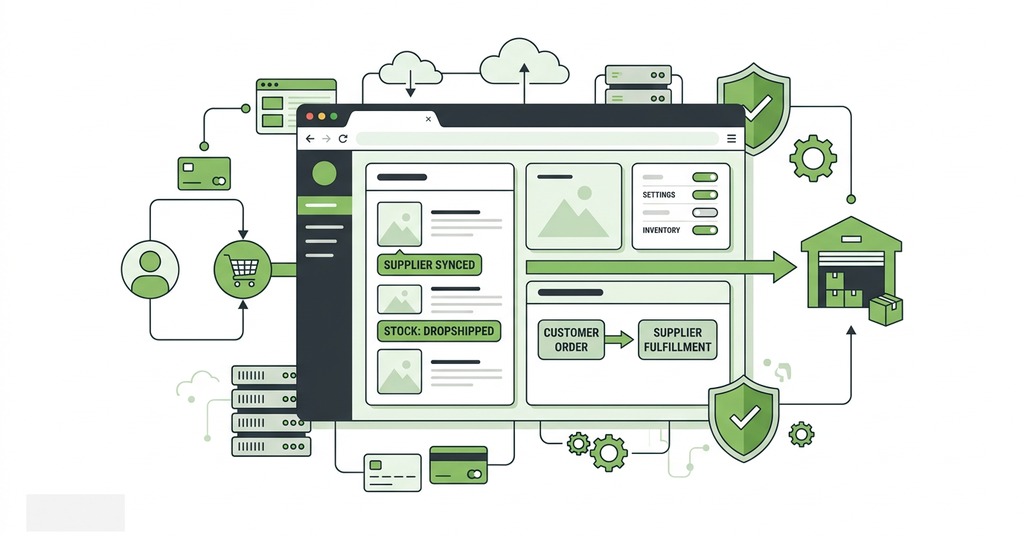
Proof can arrive before the product exists. A store can sell without owning any stock, since dropshipping and print-on-demand leave the shipping to a third party once a customer has ordered, and downloadable products and pre-orders arrive at the same place from a different direction.
For a first store the advantage is narrow but real, since the cost of being wrong is a listing fee plus some evenings rather than a room full of unsold goods.
What the Legal Side Requires at the Start
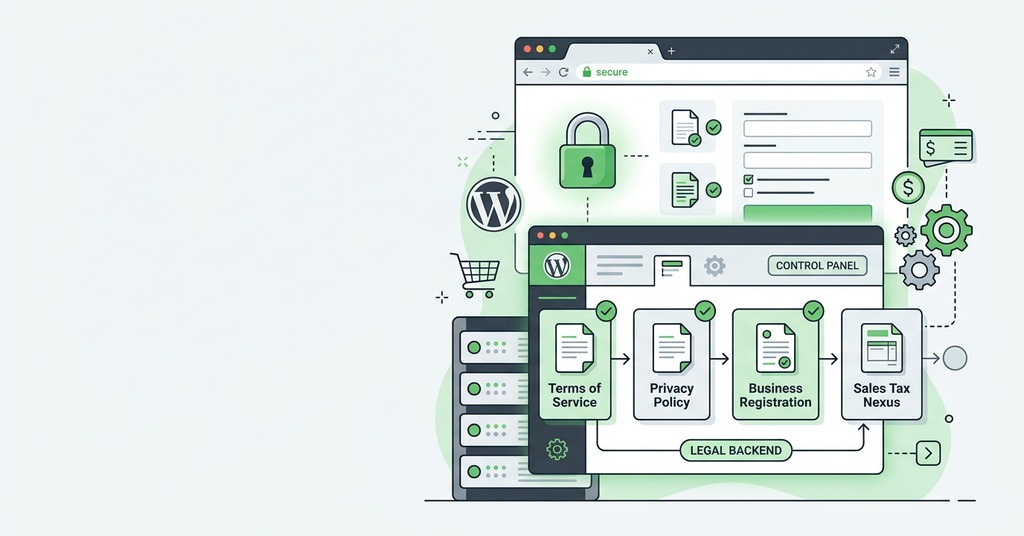
In the United States, a sole proprietorship requires no formal state filing. You can operate under your own name immediately and register a DBA trade name for roughly $10 to $100 if you want one. An EIN comes free directly from the IRS, keeping your Social Security number off invoices. The Small Business Administration explicitly warns against third-party sites that charge a fee for an EIN.
An LLC belongs to a later stage. State filing fees range from $35 to over $500, with an average first-year cost of about $224. The protection only starts paying for itself once revenue is large enough to be worth protecting.
Where the Store Lives When You Are Ready
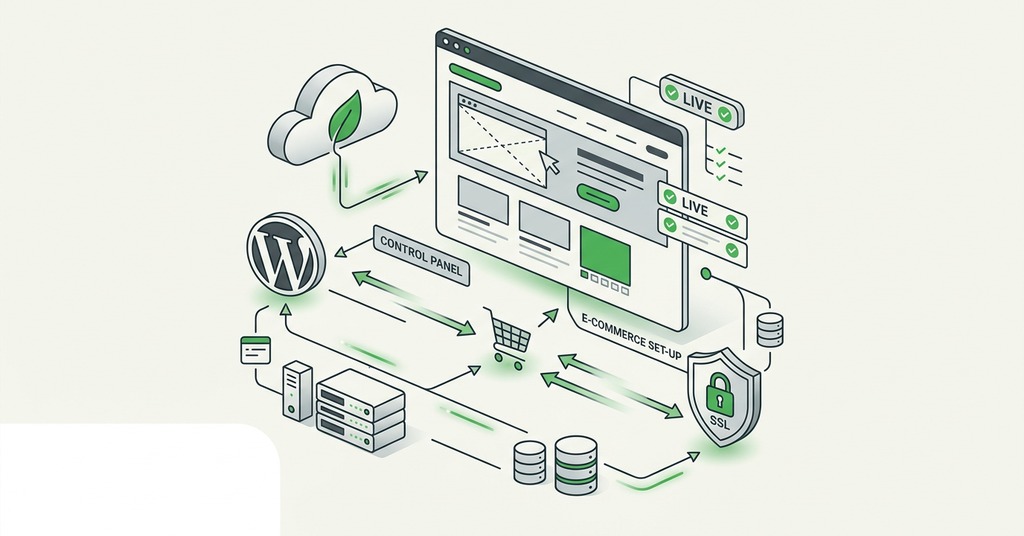
At very low volume, a marketplace is cheaper and faster than a standalone site. Etsy charges nothing monthly, $0.20 per listing, and 6.5% of the order total including shipping. Your own site wins on fees and on customer ownership once sales pass roughly $2,000 a month. The gap widens as volume grows, because a marketplace takes a percentage of everything while a subscription stays fixed. At $10,000 in monthly revenue across 100 orders and 500 listings, Etsy takes about $1,075, roughly 10.75% of revenue. A Shopify store takes about $359 for the same month, roughly 3.6%, subscription and processing included. The $716 difference is a month of paid testing that the marketplace seller never gets to run.
A third option exists between a marketplace and a hosted platform, the self-hosted WooCommerce store on your own hosting account. It removes the platform subscription. Maintenance becomes the owner’s job. Because WooCommerce is a heavier application than a blog, that stage needs hosting that will not slow the storefront down. Slow pages cost conversions directly. GreenGeeks fits that stage, with its LiteSpeed and LSCache stack and free migration handled by the support team for a store moving off another platform. Its own website builder is there for owners who want something simpler than WooCommerce.
A standalone store owns its acquisition entirely. No marketplace audience comes with it. The first month’s traffic is exactly what your own channels produce. Make the move once acquisition is already producing steady sales, and let the marketplace keep the job of discovery until then.
Getting Your First Customers with No Audience
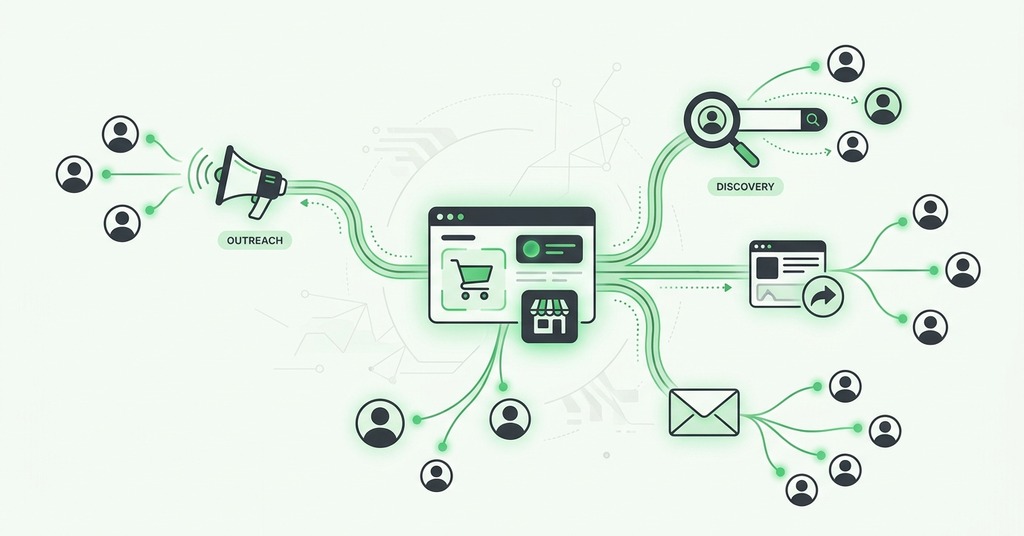
Paul Graham’s instruction for this stage is to do things that don’t scale. In practice that means recruiting users one at a time and onboarding each of them personally. Founders at Stripe, Airbnb, and DoorDash fulfilled orders by hand at the start. First customers for a small store come from the same place, individual conversations.
Most of the early traffic comes from two places, the niche communities where the problem already gets discussed and small paid tests run one at a time. Ad testing goes wrong in a predictable way. Beginners raise budgets after one good day and kill them after one bad one. A test needs three to seven days before anyone touches it, since the platform’s learning phase produces noisy early days.
A first order can come from the Netherlands and be refunded in full within a week, because the payment settings named a provider unavailable in the store’s home country. The order still answers the only question that matters, which is whether a stranger would buy. First sales arrive anywhere from 48 hours to a couple of months in. Most new stores take three to six months to reach profitability. The wait is uneven, and the first sale is usually messy in operational ways too.
Finding customers is harder than building the store, and it is where most first stores stall. Spending $500 on Facebook ads for two or three sales is a common early result. Getting past that stage is unglamorous and repetitive. It means showing up in the community every day and running one measured ad test at a time. The product then improves on what buyers say rather than on what the owner assumed, and the stores that survive the first year are usually the ones still doing all of this in month four.
Frequently Asked Questions
Can I Start an Online Store with No Money?
Close to it. Marketplace listings and no-inventory models cover the store itself, and free trials cover most of the rest. The one unavoidable line is a domain at $10 to $20 per year.
How Much Does It Cost to Start an Online Store?
The floor is a domain at $10 to $20 per year plus a platform fee, which starts near $0 on Etsy or $5 a month for a starter store plan.
How Do I Start an Online Store Without Inventory?
Dropshipping and print-on-demand both have a third party shipping only after a customer orders. Downloadable products and pre-orders reach the same result from a different direction. Pre-orders legally obligate a refund if you cannot deliver, so set a delivery date you are confident in.
Do I Need an LLC to Sell Online?
No. A U.S. sole proprietorship needs no state filing, and an LLC stays optional until revenue justifies the liability protection. A free EIN from the IRS covers a business bank account without forming anything.
Is a Waitlist Enough Validation?
No. Pre-orders or deposits from strangers are the stronger proof, though over 15% visitor-to-signup from cold traffic is a strong waitlist signal.
Is It Better to Sell on Etsy or My Own Website?
Etsy is cheaper at very low volume, with no monthly fee and a built-in buyer audience. Your own site wins on fees and customer ownership once monthly sales pass roughly $2,000.
What Fees Does Etsy Charge Sellers?
$0.20 per listing, renewed every four months or per sale. Then 6.5% of the order total including shipping and about 3% plus $0.25 in U.S. processing. An Offsite Ads fee of 12 to 15% applies to ad-driven sales, mandatory above $10,000 a year.
What Should I Sell Online as a Beginner?
Start with a problem you personally have, in a category you can work in for years, and validate it with real buyers before buying inventory.
How Do I Get My First Customers with No Audience?
Find them manually, in the niche communities where they already discuss the problem. Small ad tests of $50 to $300 also work, given 3 to 7 days each before judging.
How Long Does It Take to Make Money with an Online Store?
Three to six months to profitability is the usual range for a new store, and a marketplace listing with built-in traffic shortens the wait.
What Mistakes Do First-Time Online Store Owners Make?
Ordering inventory before validating demand, and building a custom site before testing it. A $16,000 agency-built first website is the expensive version of the second mistake.
How Many Customer Interviews Do I Need Before Launching?
10 to 20 focused interviews is the common early target, though repeated patterns in the answers matter more than the count.
